Medical Advocates for Social Justice
Conference
Poster
|
Share this Poster with a Colleague Kaletra Library Service Home |
INTRODUCTION
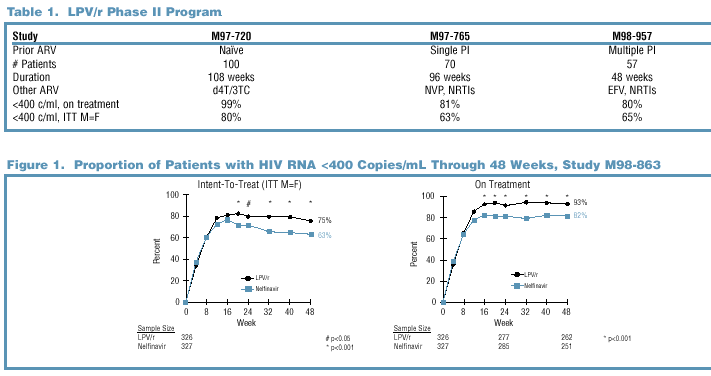
Lopinavir (LPV)/ritonavir (Kaletra, formerly known as ABT-378/r) is a novel HIV protease inhibitor (PI) that, by virtue of its high inhibitory quotient (IQ, C trough /EC 50 wt HIV >75), theoretically provides a pharmacologic barrier to the emergence of resistance from wild-type virus. Therapy with LPV/r has been shown to produce a significant decline in plasma HIV RNA levels in three separate phase II clinical trials 1,2,3 (Table 1) and superior antiviral activity relative to nelfinavir in a randomized, double-blind phase III trial through 48 weeks of treatment 4 (Figure 1).
To date, the selection of phenotypic resistance to LPV has not been identified among 470 antiretroviral-naïve patients treated for >48 weeks.5 Several prospective and observational studies have been initiated to monitor for the development of resistance to LPV and to determine appropriate clinical management should such resistance occur. In the absence of data from primary treatment failures, analysis of cross-resistance patterns from viral isolates with reduced LPV susceptibility can provide insight into potential treatment options following failures associated with LPV resistance. Baseline isolates from 113 protease inhibitor experienced patients who had never received LPV/r were analyzed to determine the correlation between in vitro phenotypic susceptibility to LPV versus other PIs. Additionally, phenotypic susceptibility to LPV and other protease inhibitors is compared in five protease inhibitor experienced patients in whom resistance to LPV developed during virologic rebound on LPV therapy.
METHODS
In Vitro Cross Resistance Between Lopinavir and Other Protease Inhibitors
• Baseline phenotype was performed by the PhenoSense ™ method (ViroLogic) on 56 viral isolates from multiple PI-experienced patients entering Study M98-957.
• Baseline genotype, including the entire protease and reverse transcriptase genes, was determined by population sequencing. The LPV mutation score for each isolate was defined as the number of mutations in protease out of the eleven mutations associated with reduced in vitro susceptibility to LPV as previously reported.6 These eleven mutations are L10/F/I/R/V, K20M/R, L24I, M46I/L, F53L, I54L/T/V, L63P, A71I/L/T/V, V82A/F/T, I84V, and L90M.
Analysis of Cross Resistance to Other Protease Inhibitors Following Evolution of Lopinavir Resistance
• Viral isolates from PI-experienced patients in Studies M97-765 and M98-957 who either failed to suppress plasma HIV RNA levels to <400 copies/mL or experienced a sustained rebound in plasma HIV RNA to >400 copies/mL during LPV/r therapy were submitted for phenotypic and genotypic analysis. Isolates from Study M97-765 were submitted to Virco where phenotypic analysis was performed by the Antivirogram ™ method. Isolates from Study M98-957 were submitted to ViroLogic where phenotypic analysis was performed by the PhenoSense ™ method. Viral isolates from five of the 127 PI-experienced patients participating in these two studies demonstrated evolution of LPV phenotypic resistance during LPV/r therapy.
• Treatment history for one patient who had failed one prior PI regimen and who subsequently developed LPV resistance during viral rebound on LPV/r therapy was provided by the investigator.
RESULTS
In Vitro Cross Resistance Between Lopinavir and Other Protease Inhibitors
• The correlation between the relative in vitro phenotypic susceptibility of viral isolates to different PIs can be overestimated if the panel contains a substantial proportion of isolates that are susceptible to both drugs. Therefore, baseline viral isolates from multiple PI-experienced patients entering Study M98-957 (prior to LPV/r therapy) were analyzed using only the subset of isolates with significantly reduced susceptibility (>2.5-fold increase in EC 50 relative to wild-type HIV, cutoff of the ViroLogic PhenoSense ™ assay) to one or both of the two drugs being compared.
• The median LPV mutation score for the subset of 47 viral isolates used for any cross comparison was 6 (range 0 to 10).
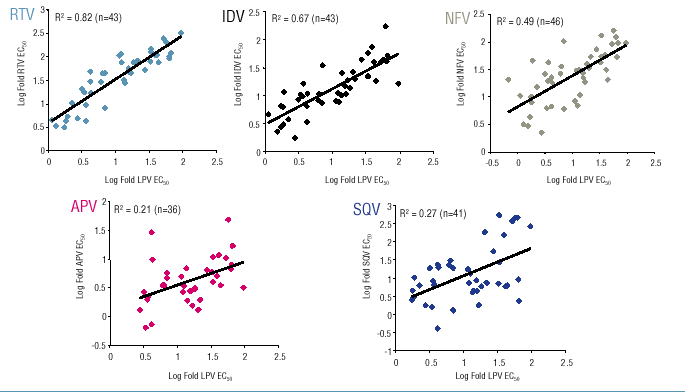
• The phenotypic susceptibility correlation was greatest between LPV and ritonavir (RTV, R 2 =0.82) and indinavir (IDV, R 2 =0.67). An intermediate level of correlation was seen between phenotypic susceptibility to LPV and nelfinavir (NFV, R 2 =0.49), and a much lower level of correlation was observed between LPV and either saquinavir (SQV, R 2 =0.27) or amprenavir (APV, R 2 =0.21) (Figure 2).
Figure 2. Phenotypic Correlation of Susceptibility of Baseline Viral Isolates to Lopinavir and Other Protease Inhibitors
• All of the 24 patients whose baseline viral isolates displayed >10-fold reduced susceptibility to LPV had received prior therapy with IDV and/or RTV (IDV: 21/24, RTV: 22/24, both: 19/24). The median EC 50 to APV was 4.5-fold (relative to wild-type virus) for these isolates.
• Only 5 isolates displayed >10-fold reduced susceptibility to both LPV and APV.
• The median fold EC 50 , relative to wild-type susceptibility, of LPV and APV was plotted as a function of LPV mutation score for the 56 baseline isolates with phenotype data available from multiple PI-experienced patients entering Study M98-957. Viral isolates with an LPV mutation score of 8 or more displayed a median of 44-fold reduced susceptibility to LPV compared to 6-fold for APV (Figure 3).
Figure 3. Phenotypic Susceptibility to LPV and APV as a Function of Lopinavir Mutation Score
Analysis of Cross Resistance to Other Protease Inhibitors Following Evolution of Lopinavir Resistance
• Phenotypic and/or genotypic data are available for five PI-experienced patients who developed LPV resistance during viral load rebound on LPV/r therapy. All of these patients had at least 4 protease mutations associated with reduced susceptibility to LPV prior to initiating LPV/r therapy.
• Genotypic and phenotypic data from these five patients are provided in Tables 2 and 3, respectively.
Table 2. Evolution of Genotypic Resistance to Lopinavir in PI-Experienced Patients with Baseline Mutations
Table 3. Evolution of Phenotypic Resistance to Lopinavir in PI-Experienced Patients
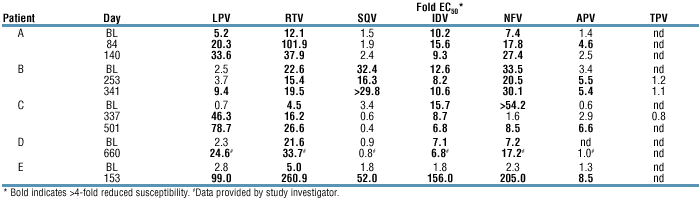
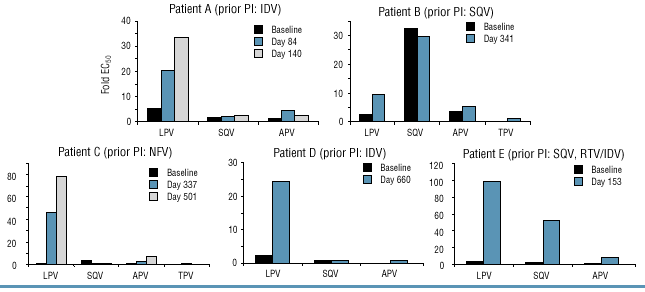
• Each of the above five viral isolates either remained resistant or developed resistance to RTV, IDV, or NFV coincident with an increase in phenotypic resistance to LPV (Figure 4).
• All rebound viruses either remained fully sensitive or demonstrated modestly reduced susceptibility to APV (up to 8.5-fold concurrent with 99-fold resistance to LPV—Figure 4).
• The rebound isolates for the three patients with no prior SQV treatment (patients A, C, and D) remained fully sensitive to SQV (Figure 4).
• The two isolates that were tested against tipranavir were fully sensitive (Figure 4).
Figure 4. Phenotypic Cross Resistance to Other Protease Inhibitors of Viruses Selected by Lopinavir In Vivo
Response to RTV/APV Based Therapy Following Viral Rebound and Development of Lopinavir Resistance During Lopinavir/r Therapy
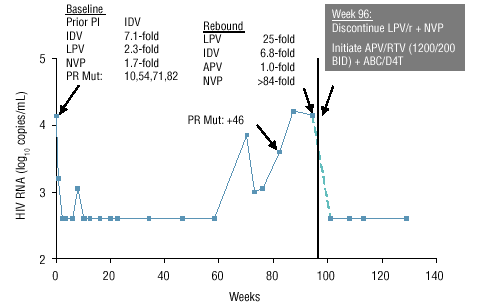
• Preliminary data on the virologic response of one of the above patients (D) to a subsequent antiretroviral regimen after discontinuation of study medications has been provided by the investigator.
• Patient D entered Study M97-765 on an antiviral regimen consisting of indinavir, AZT and 3TC (Combivir). At baseline, the EC 50 of LPV was 2.3-fold above wild-type susceptibility and the following four mutations associated with PI resistance were observed: L10I, I54V, A71V, V82A.
• On study day 1, indinavir was replaced with LPV/r at a dose of 400/100 BID. On study day 15, nevirapine was started at a dose of 200 mg QD and was increased to 200 mg BID on study day 29. Additionally, the NRTIs were altered on study day 15 such that the subject was receiving ddI in conjunction with LPV/r and nevirapine.
• Viral load declined to <400 copies/mL by Day 15. On Day 492, rebound of plasma HIV RNA to >400 copies/mL was noted. Rebound was confirmed on continued study therapy at a subsequent visit. A phenotypic susceptibility assay obtained on Day 660 demonstrated 25-fold reduced susceptibility to LPV with wild-type susceptibility to APV.
• Subsequently, the patient was discontinued from Study M97-765 study medications and offered "best available therapy." A regimen of amprenavir 1200 mg BID, ritonavir 200 mg BID, d4T 40 mg BID, and abacavir 300 mg BID was started on study day 676. After 32 days on the new regimen, viral load had declined to <400 copies/mL. Viral load suppression was maintained at <400 copies/mL through 228 days of treatment on the new regimen, the latest available time of follow-up.
• Viral load response over time and available viral genotype/phenotype values are presented graphically in Figure 5.
Figure 5. Virologic Response of Patient D During Lopinavir/r Therapy and Follow-Up on RTV/APV Based Therapy
CONCLUSIONS
• Because no viral resistance to LPV has been observed to date in patients who initiated their antiretroviral therapy with LPV/r, conclusions regarding cross resistance between LPV and other protease inhibitors must be drawn from in vitro data and information from PI-experienced patients who develop LPV resistance during viral rebound on LPV/r therapy.
• Viral isolates selected during therapy with PIs whose susceptibility profiles strongly resemble that of LPV (specifically RTV and IDV) remain relatively susceptible to APV and SQV.
• Phenotypic resistance to APV appears to develop more slowly than phenotypic resistance to LPV with the accumulation of protease mutations associated with reduced susceptibility to LPV.
• In vitro findings are supported by observations in PI-experienced patients whose viral isolates developed resistance to LPV during rebound on LPV/r therapy. In these 5 patients, rebound viruses either remained fully sensitive or demonstrated modestly reduced susceptibility to amprenavir despite the development of reduced susceptibility to LPV. Rebound isolates from the two patients with no prior SQV treatment remained fully sensitive to SQV, and two isolates with data available remained fully sensitive to TPV as well.
• Clinical investigation of RTV/APV and RTV/SQV based regimens in patients who fail LPV/r therapy with virus resistant to LPV is underway. Viral re-suppression to <400 copies/mL has been observed through 32 weeks to date in a PI-experienced patient treated with a RTV/APV based regimen following viral rebound on LPV/r therapy with development of 25-fold reduced susceptibility to LPV but no reduction in APV susceptibility.
ACKNOWLEDGMENTS
tudy Investigators
Stephen Becker, Constance Benson, Gianpiero Carosi, Nathan Clumeck, Frank Bergmann, Sven Danner, Steven Deeks, Joseph Eron, Jr
, Judith Feinberg, Pierre-Marie Girard, Marshall Glesby, Roy Gulick, Charles Hicks, David Ho, Harold Kessler, Adriano Lazzarin, Robert Murphy, Giuseppe Pantaleo, Sharon Riddler, Jurgen Rockstroh, Paul Sax, Richard Stryker, Melanie Thompson, Roland Tubiana, David WheelerAbbott Laboratories
Gert Lankhaar, Theresa Marsh, Amy Potthoff, Richard Rode, Jackie Sylte
DuPont Pharmaceuticals
Boehringer Ingelheim
Pharmaceuticals
Virco Inc.
Kurt Hertogs, Brendan Larder
ViroLogic
NIck Hellmann
REFERENCES
1. Stryker R, Brun S, King M, et al. Kaletra (ABT-378/ritonavir) in antiretroviral-naïve HIV+ Patients: follow-up beyond 2 years and viral load suppression below 3 copies/mL. 5th International Congress on Drug Therapy in HIV Infection, Glasgow, Scotland, 2000 (abstract P46).
2. Feinberg J, Brun S, Marsh T, et al. Durable suppression of HIV+ RNA after two years of Kaletra (ABT-378/ritonavir) therapy in single protease inhibitor experienced patients. 5th International Congress on Drug Therapy in HIV Infection, Glasgow, Scotland, 2000 (abstract P101).
3. Rockstroh J, Brun S, Bertz R, et al. Kaletra (ABT-378/ritonavir) and Efavirenz: 48 Week safety/efficacy evaluation in multiple PI-experienced patients. 5th International Congress on Drug therapy in HIV Infection, Glasgow, Scotland, 2000 (abstract P43).
4. Johnson M, Walmsley S, Badley A, et al. ABT-378/ritonavir (ABT-378/r) versus nelfinavir in antiretroviral-naïve subjects: week 48 comparison in phase III, blinded randomized clinical trial. 5th International Congress on Drug Therapy in HIV Infection, Glasgow, Scotland, 2000 (oral presentation PL6.5).
5. Bernstein B, et al. Absence of resistance to Kaletra (ABT-378/r) observed through 48 weeks of therapy in antiretroviral-naïve subjects. 8th Conference on Retroviruses and Opportunistic Infections, Chicago (abstract 453).
6. Kempf D, Isaacson J, King M, et al. genotypic correlates of reduced in vitro susceptibility to ABT-378 in HIV isolates from patients failing protease inhibitor therapy. 4th International Workshop on HIV Drug Resistance and Treatment Strategies, Sitges, Spain (abstract 38).


© 2001 Medical Advocates
for Social Justice
225 West Washington Street, Suite 2200, Chicago, IL 60606
Telephone (312) 419-7289 Facsimile: (312) 419-7151
Email: [email protected]