|
|
||
|
SHARE THIS POSTER WITH A COLLEAGUE
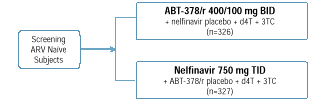
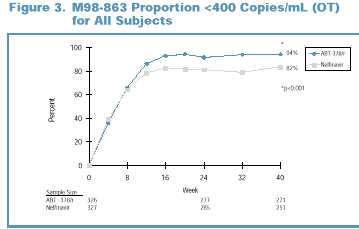
ABT-378/r is a novel HIV protease inhibitor (PI) that has shown significant antiviral activity and tolerability in clinical trials to date. ABT-378 is co-formulated with ritonavir, an inhibitor of cytochrome P450 3A. It is uniquely sensitive to pharmacokinetic enhancement by ritonavir, resulting in substantially increased ABT-378 drug exposure, even at low ritonavir doses. The mean ABT-378 C trough /EC 50 ratio (Inhibitory Quotient or IQ) for wild-type HIV is >75 when dosed at 400/100 mg BID, contributing to durability and potentially providing a pharmacologic barrier to the emergence of viral resistance.1 The efficacy and safety of ABT-378/r are currently being studied in both antiretroviral-naïve and PI-experienced subjects. Study M98-863 further examines the antiviral activity of ABT-378/r in a large, blinded, randomized, prospective study comparing the activity and safety to that of nelfinavir. (Figure 1). Results for all study subjects through Week 40 are shown in Table 1, Figure 2 and Figure 3. 2
Figure 1. Study Design

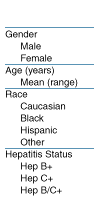
80% of enrolling subjects were male, 56% were Caucasian, and the mean age was 38 years.
Table 1. M98-863 Subject Disposition at Week 40 for All Subjects

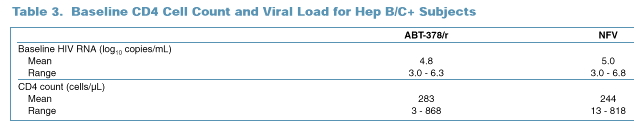
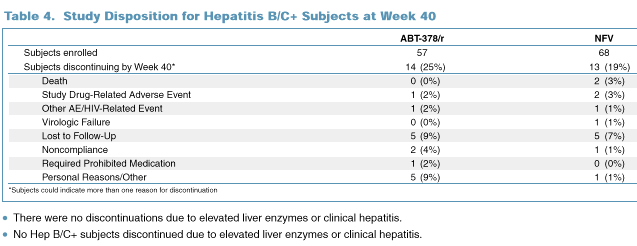
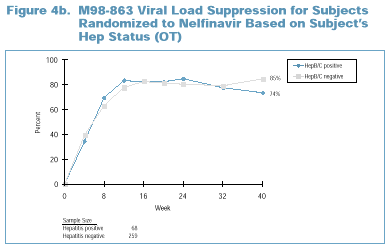
This study examines the safety, tolerability and antiviral activity of ABT-378/r and nelfinavir in the subset of M98-863 subjects who were hepatitis B/C+ at baseline.
METHODS
Subjects who were hepatitis B/C+ at baseline were allowed to enter the study. Any subject, regardless of hepatitis status, was excluded from the study if their SGOT/SGPT level was >3 times ULN at baseline. Of the 653 subjects, 125 were hepatitis surface antigen positive (HepB+) and/or hepatitis C antibody positive (Hep C+). In these subjects, study drug was interrupted if the subject developed signs or symptoms of clinical hepatitis associated with LFT elevation > 5 x ULN (Grade 3) or if the SGOT/AST or SGPT/ALT values elevated to > 10 x ULN (Grade 4). The safety and efficacy of anti-retroviral therapy in subjects who were Hep B/C+ at baseline was compared with that of subjects who were Hep B/C- at baseline.
RESULTS
Table 2. Demographic Characteristics for Hepatitis B/C+ Subjects


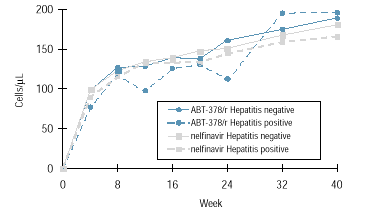
Figure 5. M98-863 Mean CD4 Cell Count from Baseline in Treatment Groups

Within each treatment group, the mean change in CD4 cell counts for subjects who were Hep B/C+ at baseline were similar to those subjects Hep B/C- at baseline.
SAFETY / TOLERABILITY
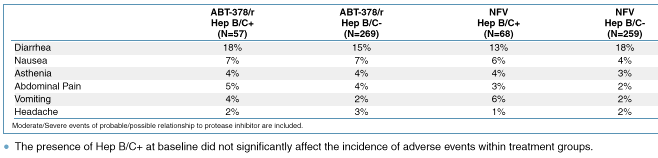
Table 5. Most Common Adverse Events within Treatment Groups for Subjects Hep B/C+ and Hep B/C-

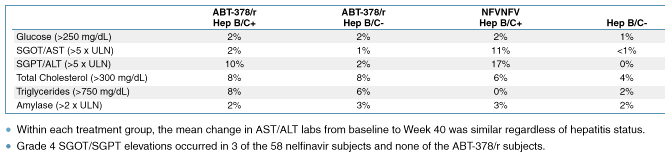
Table 6. Incidence of Grade 3/4 Lab Abnormalities within Treatment Groups for Subjects Hep B/C+ and Hep B/C-

CONCLUSIONS
REFERENCES
Treatment of HIV+ Subjects Co-infected with Hepatitis B or C Safety and Efficacy Comparison of Kaletra(ABT-378/ritonavir) vs. Nelfinavir from a Phase III Blinded Randomized Clinical Trial s © 2000 Medical Advocates for Social Justice |